
California's New FCI Rules: How DC Fast Chargers Earn 10 Years of Credits
CARB's Fast-Charging Infrastructure pathways let DC fast-charging sites lock in ten years of capacity credits, paid on nameplate power rather than energy actually dispensed. What changed, who qualifies, how the math works, and the guardrails to watch.
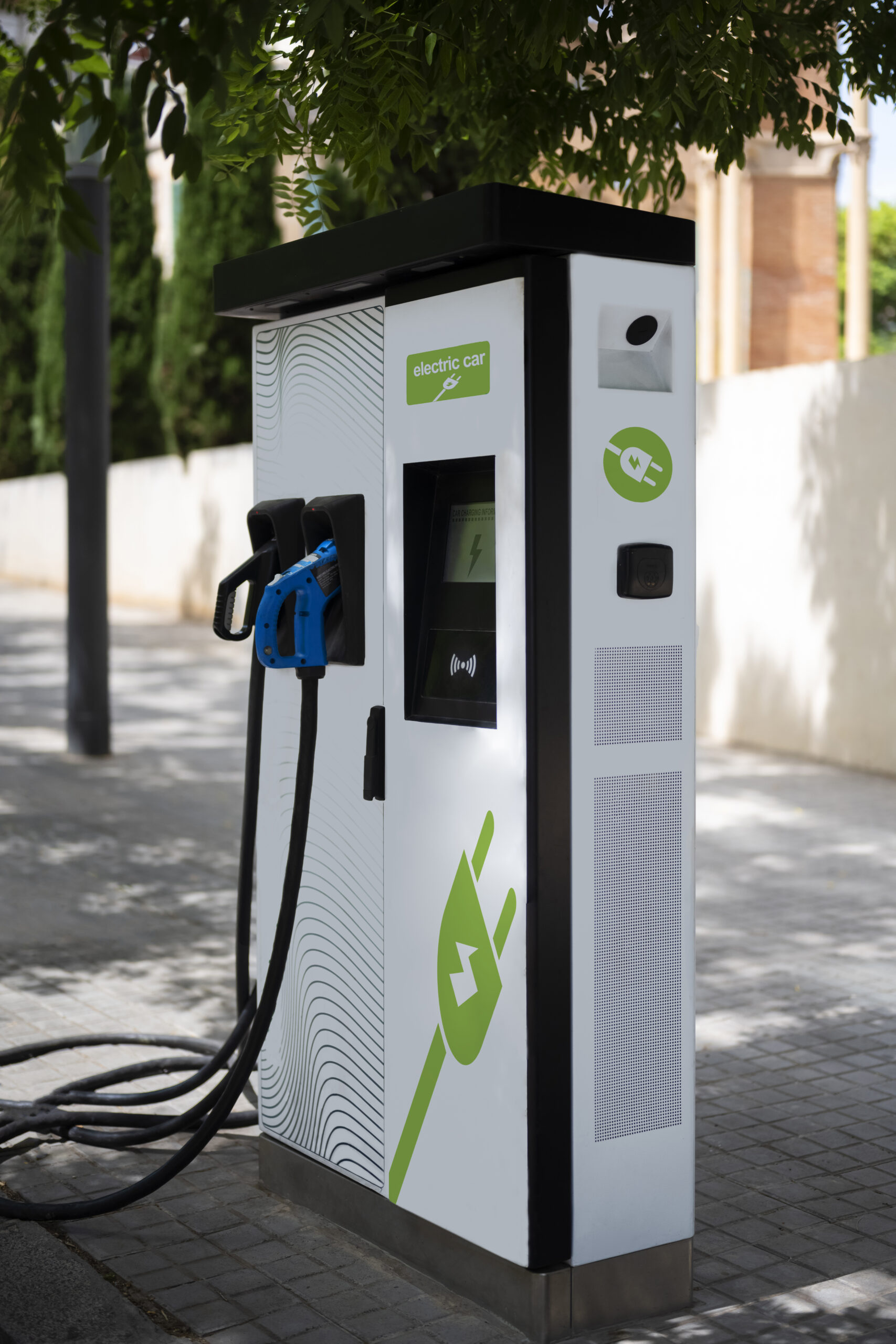
Recent updates to the Low Carbon Fuel Standard (LCFS) have expanded how DC fast-charging equipment can earn credits. Instead of being paid only for the kilowatt-hours (kWh) actually dispensed, site owners can now lock in 10 years of “capacity” credits under the Fast-Charging Infrastructure (FCI) pathways.
Below is a practical breakdown of what changed, who qualifies, how the math works, and the pitfalls to avoid.
Two distinct pathways, two application deadlines
| Pathway | Vehicle class served | Application cut-off | Minimum charger rating | Credit life |
|---|---|---|---|---|
| LMD-FCI | Light & medium duty | 31 Dec 2030 | 50 kW | 10 years |
| HD-FCI | Heavy duty (≥14,001 lb) | 31 Dec 2035 | 50 kW | 10 years |
Applications are first-come, first-served. Once the potential credits from all approved FCI projects equal 2.5% of statewide LCFS deficits, CARB will stop accepting new submissions. Each company is also capped at 0.5% of statewide deficits.
Eligibility and power ceilings
- Location and date. Chargers must be in California and permitted on or after 1 Jan 2022.
- Networked charging. Every unit must report real-time availability.
- Site capacity caps. LMD-FCI is limited to 2.5 MW per address; HD-FCI to 40 MW per address.
- Max Site Deliverable Power. The maximum power the site can deliver at once. This value must be reported to meet FCI program requirements.
- Shared HD-FCI requirements. Shared heavy-duty sites must be within 5 miles of an Alternative Fuel Corridor, be on or adjacent to truck parking, or have won a competitive grant that scored location.
- HD-FCI Class 8 accessibility. Proof that the site can accommodate Class 8 heavy-duty trucks (≥33,000 lbs GVWR) is required for the heavy-duty pathway. This can be demonstrated with satellite imagery, site measurements, or official permitting documents showing truck access.
How the new capacity-credit formula works
Each quarter, you compare two figures:
- Consumption credits — the traditional LCFS credit for kWh actually sold.
- Capacity credits — a fixed allowance based on nameplate power × 24 hours × a site-type factor.
| Charger context | Site-type factor | Effect |
|---|---|---|
| Public / shared access | 20% | Doubles credit volume |
| Private access (workplace, apartment garage, fleet depot) | 10% | Half the public factor |
The factor is fixed in the rule for both LMD and HD sites.
Example: a 350 kW public charger. The capacity baseline is 350 kW × 24 h × 20% = 1,680 kWh/day. If the site dispenses only 800 kWh on a slow day, you still claim the higher 1,680 kWh equivalent. Uptime, as reported by the network, scales the credit: higher availability means more credits, and prolonged outages reduce them.
Financial guardrails
- Return-on-capital cap. Once cumulative FCI revenue exceeds 1.5× net capex (after grants), a site can earn only consumption credits, not capacity credits.
- 24-month operability clock. If the station is not online within two years of approval and the 2.5% system cap has already been reached, approval is canceled.
Reporting and verification essentials
- Quarterly uploads of kWh dispensed and charger availability
- An annual cost-revenue report covering capex, O&M, land rent, grants, and retail electricity price
- Third-party verification for all electricity reports, starting with data year 2026
Key takeaways
The new FCI rules shift the model from credits follow energy dispensed to credits finance hardware readiness. By monetizing spare capacity for a full decade, CARB is effectively front-loading revenue so bigger, faster chargers can pencil out while utilization catches up.
Early movers, especially those who keep stations public and highly available, stand to capture maximum capacity credits while the door is still open.
Questions about modeling FCI revenue or assembling an application packet? Our team has guided projects from concept through LCFS/FCI credit generation and verification.
Disclaimer: This article is for informational purposes only and does not constitute legal or tax advice.