Washington State Launches Clean Fuel Standard on New Year's Day
Washington's Clean Fuel Standard went live on January 1, 2023. Todd Trauman sat down with Joel Creswell, Climate Section Policy Manager at the Department of Ecology, on how the program works, where it follows California and Oregon, and where it breaks new ground on equity.
People around the world celebrate New Year’s Day for a variety of reasons, including getting a fresh start and having an opportunity to tackle new goals. Washington State had something to celebrate with the launch of the Clean Fuel Standard (CFS) on New Year’s Day 2023, a policy that rewards clean fuel producers and consumers and helps move the needle forward on climate change solutions.
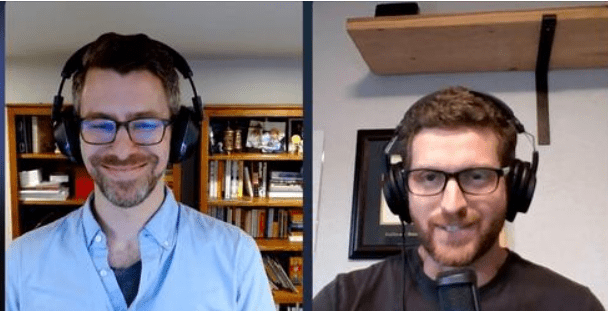
Washington State began looking into a clean fuel program over a decade ago and tasked the Washington State Department of Ecology with implementing the Clean Fuel Standard. FuSE CEO Todd Trauman had the opportunity to interview Joel Creswell, Climate Section Policy Manager at the Department of Ecology, for our podcast The Charge Cycle. Read on for insights into the standard from Joel.
When was the Washington State Clean Fuel Program made into law?
In 2021 the Clean Fuel Standard “got over the line” legislatively, according to Joel. This gave the Department of Ecology about a year and a half to prepare to enroll fleets into the program. The Clean Fuel Standard became officially active on January 1, 2023.
What are the goals of the Washington State CFS?
The goals of the CFS are to rein in climate change and clean up air quality by reducing emissions in the transportation sector, which is the biggest source of emissions. The regulation requires fuel suppliers to reduce the carbon intensity of transportation fuels to 20% below 2017 levels by 2034, meaning fuel suppliers have 11 years from the program’s inception to accomplish this goal.
Simply put, carbon intensity is the amount of carbon dioxide produced per unit of energy generated — a measure of how clean a given fuel is. The Clean Fuel Standard joins a range of greenhouse gas mitigation programs in Washington State including Cap-and-Invest and Washington Clean Cars.
How does the Washington State Clean Fuel Standard work?
Joel describes clean fuel programs as an “interesting way to decarbonize transportation.”
Because the CFS is a market-based policy, it does not rely on the government to fund it. The policy is funded through regulatory compliance. To be in compliance, regulated entities or fuel providers must calculate the carbon intensity of the fuels they sell in Washington State. This is a measure of the greenhouse gas emissions produced during the life cycle of the fuel, from production to use, or from refinery to vehicle. The Department of Ecology sets a target for the average carbon intensity of all transportation fuels sold in the state and updates this target every year.
If a fuel provider’s fuels have a lower carbon intensity than the target, they earn CFS credits, which they can sell to fuel providers whose carbon intensity is higher than the target. It’s important to note that clean fuel program credits are not interchangeable among states, even though California, Oregon, and Washington all have very similar programs under different names. Oregon operates the Clean Fuels Program, while California administers the Low Carbon Fuel Standard.
The CFS aims to motivate clean fuel producers to set up shop and produce low-carbon fuels in Washington that stay in Washington, instead of being shipped to other states with better incentives. The program can be a new source of revenue for clean fuel producers and consumers in Washington State, although there are guidelines for how this revenue must be used.
What are new best practices in the Washington State Clean Fuel Standard?
While the Washington program closely follows Oregon and California in many ways, it innovates in others. Washington State made environmental justice a priority in its rulemaking and has advanced a few new best practices around equity policy. The CFS gives electric utilities direction on what they can do with their credit revenue in order to promote equity.
For example, according to Joel, electric utilities must spend 30% of credit revenue on transportation electrification in overburdened communities around the state. Electric utilities are also encouraged to spend an additional 50% on ensuring equity of access to electrified transportation, including buses, e-bikes, and scooters.
Vulnerable populations live near ports and railroads and these populations disproportionately experience benefits of policies such as the Clean Fuel Standard. This program aims to promote equality of access to electrified transportation.
What kinds of fuel can generate credits in Washington State?
In 2023 we see an “explosion of fuel choice” including biodiesel, renewable diesel, ethanol, electricity, and hydrogen, according to Joel. Emissions per unit of energy is a way to compare across any fuel, whether it’s liquid, gaseous, or electrons. “Fuel is anything that moves a vehicle,” Joel says, so consumers of electricity or hydrogen can both be credit generators. At FuSE, we believe electricity is the future of transportation.
What is the future of the CFS in Washington?
According to Joel, “classic economics says if you incentivize something you get more of it. So let’s incentivize lower carbon fuels, making them more affordable and encouraging producers to supply more of them.” He continued: “The Clean Fuel Standard is one of many complementary policies that are working together to bend the carbon emissions curve down towards zero.”